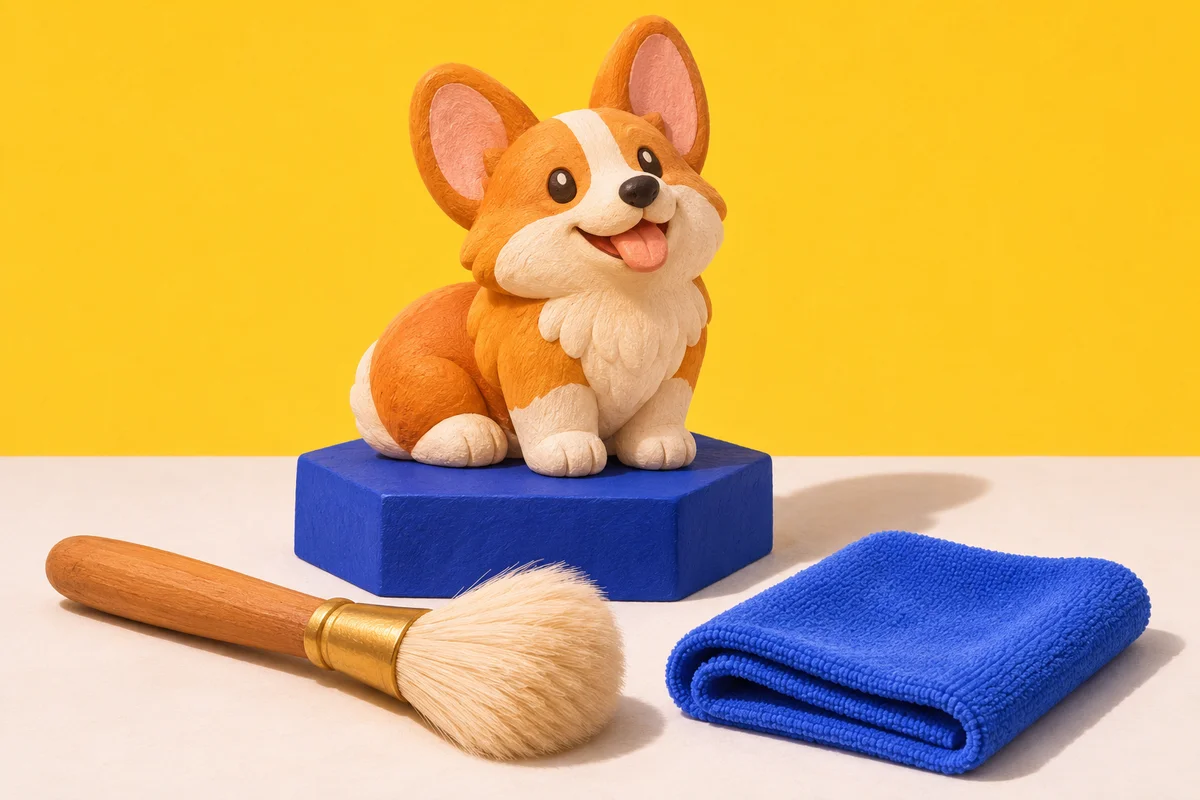
To clean figurines, first identify the material and surface finish, check for loose or damaged parts, then remove loose dust gently if the surface is stable. A clean, soft, dry brush is a cautious starting point for routine dusting. Water, cleaning products and repairs need instructions for the particular piece.
A glazed porcelain ornament, a painted plastic collectible and a custom printed figure can look similar in a photograph. That does not make the same cleaning method suitable for all three.
Check the figure before you clean it
Look for the maker’s care card, product listing or order information. Find out what the figure is made from, whether it is painted or coated, and whether it has glued parts. If those details are missing, ask the maker before trying to remove a mark.
The Texas Historical Commission’s preservation guidance recommends checking an object’s condition before routine dusting and getting professional advice for major cleaning or repairs. You do not need museum equipment to adopt that useful first step: look closely before touching.
| What you see | What to do next |
|---|---|
| Loose dust on an intact, dry surface | Consider gentle dry dusting, following the maker’s instructions. |
| Flaking paint, a tacky surface or a loose accessory | Stop and ask the maker about the condition before brushing. |
| A stain that does not move with light dusting | Describe the mark and request a material-specific cleaning method. |
| A crack or broken part | Keep the pieces together and ask about repair options. |
A gentle routine for loose dust
- Clear a space. Use a stable, well-lit table. Set down a clean, soft cloth to cushion the working area.
- Support the solid part. Hold the base or main body. Do not lift the figure by glasses, fingers, ears or another projecting detail.
- Choose a clean brush. Use a soft brush reserved for dusting, without dried paint, makeup or other residue.
- Work lightly. Move dust away with small, gentle strokes. Work around fragile details instead of pushing into them.
- Check as you go. Stop if color transfers, the finish changes or a part moves. Removing every speck is less important than leaving the surface intact.
Do not turn light dusting into scrubbing. Skip canned air, vacuum attachments and powered tools unless the maker specifically recommends them for the piece.
Can figurines be cleaned with water?
Sometimes, but there is no universal answer. Lladró gives different care instructions for its porcelain sculptures depending on whether they have metallic finishes. Those instructions apply to that manufacturer’s pieces; they are not permission to wash a painted or printed figure from another maker.
The Canadian Conservation Institute’s plastics guidance also explains why identifying materials matters and describes careful dry cleaning approaches. For an unknown finish, do not assume that soap, alcohol, polish, a disinfectant wipe or a household cleaner is suitable.
If a maker recommends a damp method, follow its exact limits. Do not add more product, extend the contact time or soak the figure to make the job faster.
Reduce the need for heavy cleaning
Choose a display position where the figure is easy to reach without brushing against other objects. Leave enough space to lift it by its base. A shelf edge, frequently moved desktop or crowded arrangement makes a careful cleaning routine harder.
Keep the care information with the order details, especially if the figure is a gift. Our figure display guide can help you plan the arrangement. If you are comparing different kinds of figures, remember that printed and clay figures may need different instructions.
What to do about damage
Photograph the problem and keep any detached pieces in a small container. Contact the maker before using glue, touching up paint or trying to straighten a part. Describe what happened and whether the surface was already loose, sticky or cracked. This guide cannot identify a repair method from appearance alone.
Common care questions
How often should I dust a figure?
Check it periodically and dust when needed rather than handling it unnecessarily. The right routine depends on the display spot, surface condition and maker’s advice.
Can I put it in a dishwasher?
Do not assume it is dishwasher safe. A display figure needs its own care instructions, even if it resembles a ceramic item that you wash.
What should I ask before buying a custom figure?
Ask about the actual material, finish, handling and cleaning instructions. Include care requirements in your custom figure buying checklist, alongside the design and available options.